|
|
Dear friends and supporters of GFCNI,
This edition highlights three themes at the center of our work: evidence, impact, and partnership.
The TREOCAPA trial offers important new insights into preventive paracetamol for preterm infants. Although the primary outcome did not confirm the expected benefit, this large, multicenter study strengthens our understanding of patent ductus arteriosus (PDA) management and underscores the importance of rigorous research and long-term follow-up.
Our HDFN awareness campaign reminds us that rare conditions can have profound and lasting effects on families. Beyond the clinical diagnosis, HDFN shapes emotional wellbeing, family life, and future pregnancies. Early detection, specialist care, and comprehensive support are essential.
Finally, new research on family-centered care challenges us to measure what truly matters. Survival alone is not enough. Emotional wellbeing, communication, and parental partnership are fundamental to quality neonatal care.
Together, these topics reaffirm our commitment to advancing care that is both evidence-based and deeply human.
Warm regards,
Silke Mader and the GFCNI team
|
|
© GFCNI
|
2026 HDFN Awareness Campaign
HDFN Is Rare – But the Impact on Affected Families Is Profound
Hemolytic disease of the fetus and newborn (HDFN) is a rare but serious condition that occurs when a mother’s red blood cells are incompatible with those of her fetus. It can lead to severe anemia in the baby before and after birth. For families, the consequences often extend beyond the clinical diagnosis and can affect mental health, finances, family relationships, and future pregnancies. In partnership with the Allo Hope Foundation, GFCNI has launched a new awareness campaign featuring essential information about HDFN, expert insights, and powerful personal stories of loss and hope. The campaign highlights the importance of early detection, specialist care, and comprehensive family support. Follow GFCNI on Instagram or Facebook to learn more. You can also visit our campaign page to read patient stories and an interview with Professor Stefan Verlohren, Chairman and Director of the Department of Obstetrics and Fetal Medicine at University Medical Center Hamburg-Eppendorf (UKE). In the interview, he discusses the monitoring and management of HDFN.
|
|
© Sera Prognostics
|
Industry Collaboration
Integrating Patient Perspectives in Preterm Birth Risk Research
GFCNI is pleased to welcome Sera Prognostics® as part of its network and is providing advisory input through participation in selected Advisory Board discussions related to the implementation of the PreTRM® Test within European healthcare systems. This consultancy focuses on ensuring that patient perspectives – grounded in lived experience and informed by scientific expertise – are meaningfully integrated into initiatives on preterm birth risk prediction and prevention. The PreTRM Test supports earlier prediction of preterm birth risk and guide preventive care pathways, with the potential to improve pregnancy outcomes for mothers at risk while contributing to more efficient use of healthcare resources.
|
|
© ONG Prematuridade.com
|
Save the Date
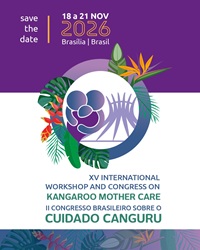
Prematuridade Hosts Global Congress on Kangaroo Mother Care in Brasília
The XV International Kangaroo Mother Care Congress will take place from November 18-21, 2026 in Brasília, Brazil, bringing together professionals, researchers and families from around the world. Held alongside the 2nd Brazilian Congress on Kangaroo Care, the event will highlight the latest evidence, innovations and lived experiences in skin-to-skin and family-centered care for preterm and low-birth-weight infants. The Congress is organized by Fundación Canguro in partnership with ONG Prematuridade.com, a member of the GFCNI network, with the support from the Brazilian Ministry of Health, the Kangaroo Foundation, and INK. Mark your calendar now.
|
|
© AFPNC
|
National Advocacy Milestone
From National Dialogue to Parliamentary Action – Ghana Advances NICU Investment
In November 2025, our partner parent organization, the African Foundation for Premature Babies & Neonatal Care (AFPNC), convened its second Purple for Prematurity Summit in Accra, mobilizing multisectoral leaders to address prematurity and sustainable neonatal financing. The three-day series combined an in-person summit, a virtual scientific training, and a nationally televised dialogue reaching more than 100,000 viewers. Following this unprecedented milestone, AFPNC was invited by Ghana’s Parliament Select Committee on Health to present evidence-based recommendations during national budget deliberations. Parliament unanimously endorsed a bill to increase investment and integrate NICU-related costs under the National Health Insurance Scheme, marking a historic policy shift in newborn health financing.
|
|
© Mama Tulia Ministries
|
Scaling Impact
Transitional Care and Vision Protection – Expanding Safety Nets for Preterm Babies in Uganda
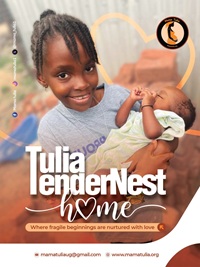
Mama Tulia Ministries, our partner parent organization in Uganda, has launched the Tulia TenderNest Home – a short-term transitional care program supporting mothers of medically stable but vulnerable preterm infants following early hospital discharge. Within three weeks, the home stabilized 13 mothers and 15 preterm babies, strengthening caregiving skills and preventing avoidable readmissions. In parallel, Mama Tulia has screened more than 2,000 infants for retinopathy of prematurity, with 243 receiving treatment, and expanded services to two additional hospitals. With Institutional Review Board approval secured and a manuscript in preparation, the organization continues to translate frontline experience into national advocacy and system-level change. We warmly congratulate Mama Tulia Ministries on these significant achievements and commend their sustained commitment to advancing equitable, life-saving care for mothers and preterm babies in Uganda.
|
|
© GFCNI
|
TREOCAPA TRIAL RESULTS
New Evidence on Preventive Paracetamol in Preterm Infants
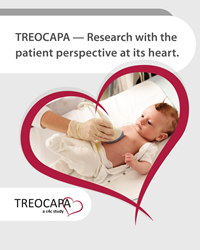
Does prophylactic paracetamol (acetaminophen) meaningfully influence closure of the patent ductus arteriosus (PDA) and related health outcomes in preterm infants? The TREOCAPA trial addressed this question in a patient-centered, multicenter study involving approximately 800 neonates across 14 European countries. Although the primary outcome did not demonstrate the anticipated benefit, the trial generated important and unexpected insights with potential implications for future PDA research and neonatal practice. Review the full results and detailed analyses, and learn more about the rationale behind the critical long-term follow-up program, TREOCAPA-LT.
|
|
© FREEP!K
|
Regional Policy Review
Maternal Immunization in Latin America – Closing Gaps to Protect Newborns
Maternal and neonatal immunization remains a critical strategy to protect infants during their most vulnerable months. A recent paper in The Pediatric Infectious Disease Journal summarizes expert discussions from a regional scientific symposium in Costa Rica examining research gaps and implementation barriers across Latin America. While maternal immunization has helped eliminate maternal and neonatal tetanus and congenital rubella in several countries, coverage during pregnancy remains uneven. Experts identified limited surveillance data, fragmented service delivery, misinformation, and inequities affecting rural and indigenous populations as key challenges. Strengthening integration between prenatal care and immunization programs, alongside improved local data and research capacity, is essential to ensure equitable and effective protection for mothers and newborns across the region.
|
|
© Unsplash
|
Outcomes Research
Defining What Matters – Measuring Outcomes in Family-Centered Neonatal Care
The Cousin Study Group published a qualitative study in Children (January 2026) in which the Group examines which outcomes truly reflect high-quality family-centered care in neonatal settings. The international research team convened focus groups with parents, a former neonatal patient, and healthcare professionals to identify meaningful measures for preterm infant care. Participants described five core outcome domains: emotional wellbeing, role functioning, delivery of care, infant physiological health, and hospital environment and resource use. Across these domains, 42 specific outcomes emerged, including bonding, parental confidence, staff attitudes, communication quality, and readmissions. The findings underscore that family-centered care extends beyond clinical indicators and highlight the need for standardized, stakeholder-informed outcomes to guide evaluation and quality improvement in neonatal practice.
|
|
© FREEP!K
|
Research & Data
Caesarean Section Rates in Europe – Why Better Data Matter for Standardized Perinatal Care
Wide variation in caesarean section rates across Europe highlights persistent differences in perinatal practice. Countries with comparable resources report markedly different levels of intervention, raising questions about the consistent application of evidence-based care. A recent joint statement published in the European Journal of Obstetrics & Gynecology and Reproductive Biology examines how caesarean section data are collected and compared across European and international sources. The authors show that commonly reported overall rates lack critical detail, including indication, timing, and population characteristics. Inconsistent definitions and incomplete reporting further limit meaningful comparison. Strengthening shared data standards is essential to evaluate care quality and support safer, more standardized perinatal care across Europe.
|
|
|
|